The combo is the whole game
Land every note and the multiplier climbs. Miss one and it drops back to nothing. A clean run and a nearly clean one score further apart than you’d expect.
 KEYSTREAK
IN DEVELOPMENT
Forty classical pieces, from one-finger melodies to ones that take both hands. Play on a MIDI keyboard, or on the keys under your hands right now. Either way you’re playing the real notes, and that’s the whole point.
Any USB MIDI keyboard, 25 keys to 88, set up in two key presses. No keyboard? The one you’re typing on covers two octaves.
Note cards drop towards your keys. Hit the right one as it lands. The fall speed is yours to set, and it goes quick.
Every note you land builds the combo. One miss ends it. That matters more than it sounds like it should.
You’re pressing the real notes of the real song, so the practice counts even when it doesn’t feel like practice.
Land every note and the multiplier climbs. Miss one and it drops back to nothing. A clean run and a nearly clean one score further apart than you’d expect.
Your first run through a song has no clock. It waits as long as you need. The pressure only arrives when you go back for a better grade, and that part is your call.
Timing, muscle memory, and eventually both hands at once. It never feels like study, mostly because you’re too busy keeping the combo alive.
Every run grades the song’s card, from Sparking up to Celestial, and the card’s frame climbs with it. Grades unlock the next song; experience opens the rest of the library. Celestial takes real work.
Forty classical pieces in one Journey, first song to last. The difficulty climbs so gradually you rarely notice it happening.
Drop in a MIDI file and it turns up in the library as a playable card, with its own colour and pattern.
Package your own MIDI files into a Journey of their own, and it sits in the library beside the built-in one.
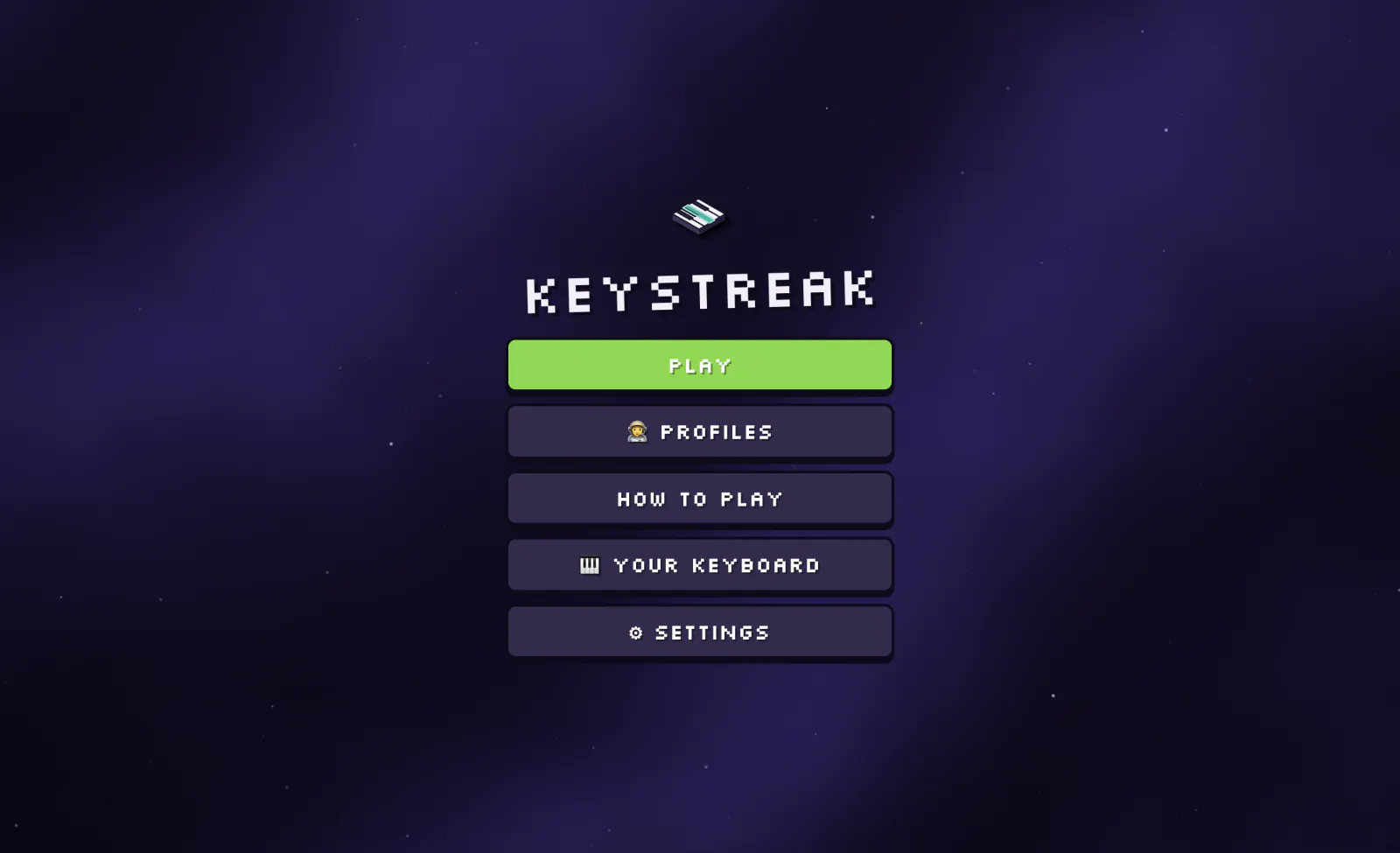
Where it starts.
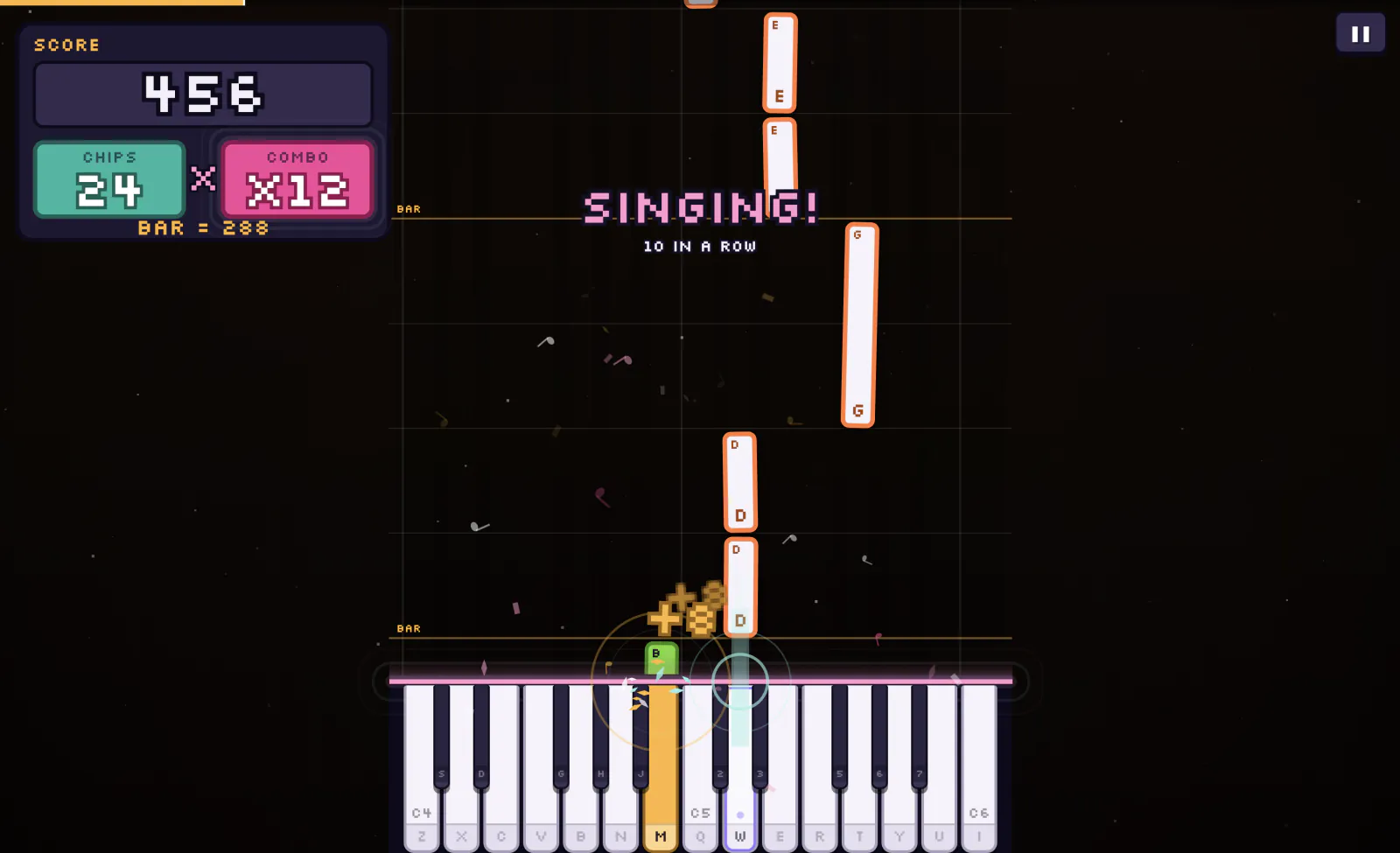
A streak going, ten notes in.
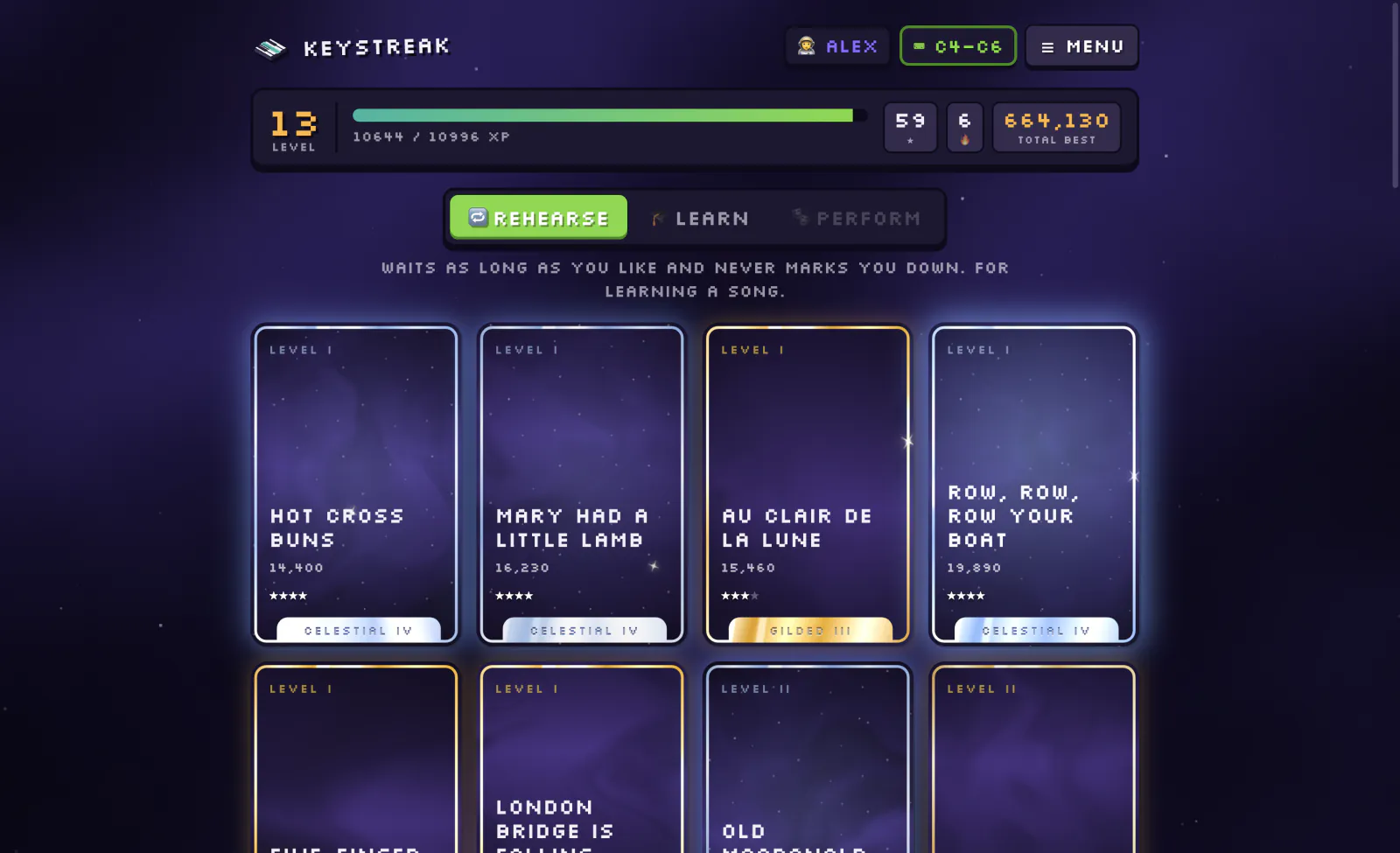
The library, which opens up as you go.
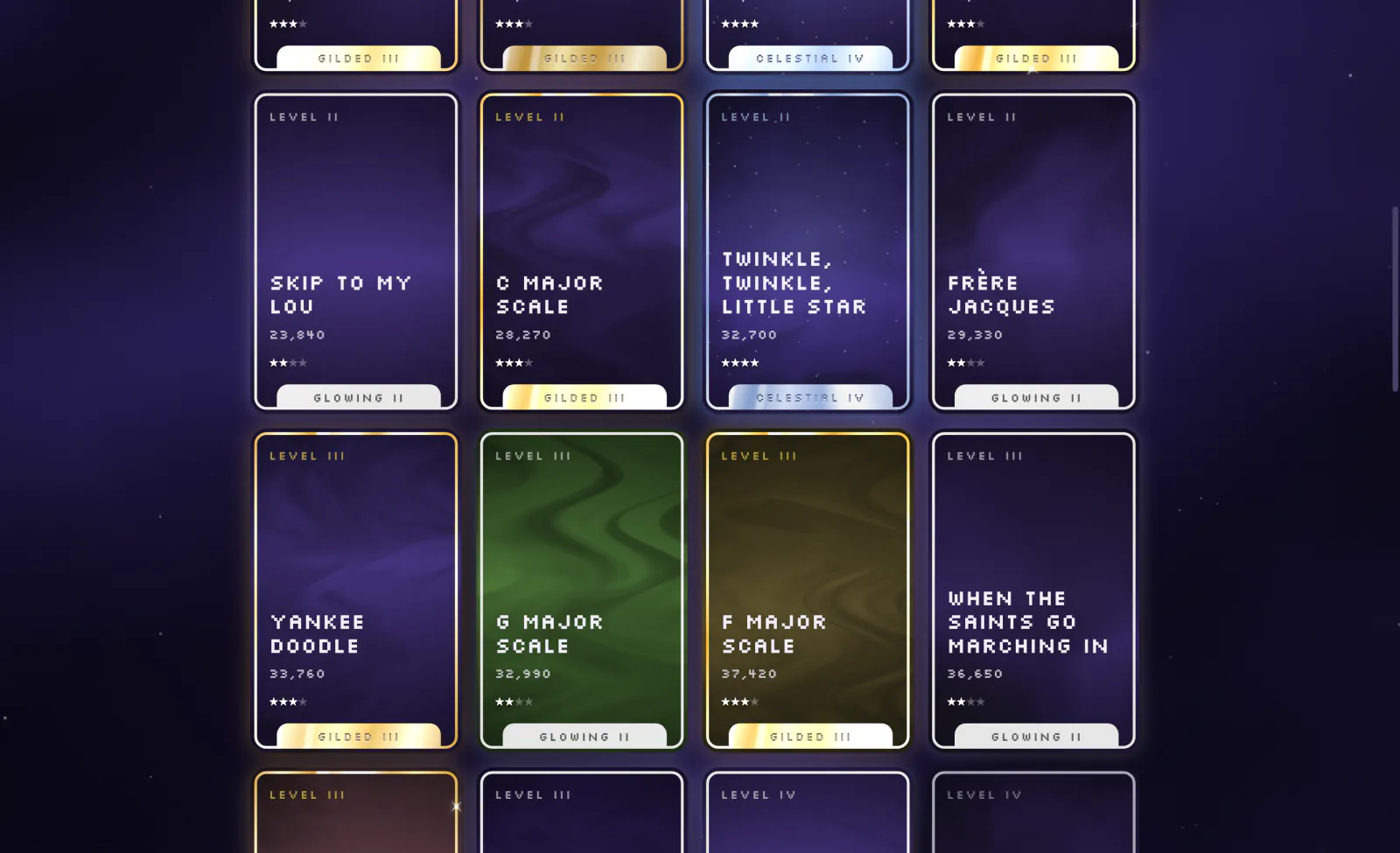
Every song gets its own card, colour and pattern.
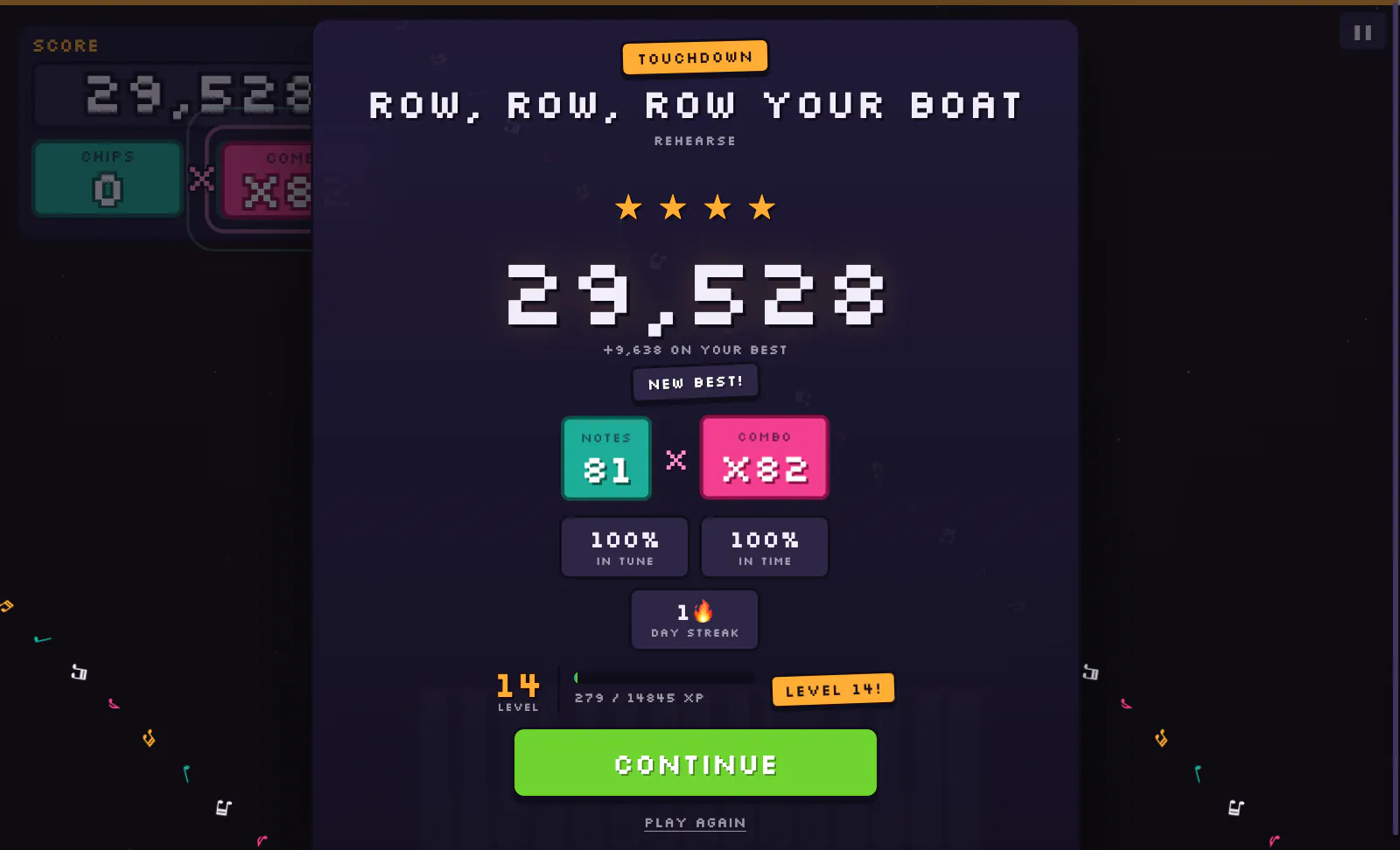
The end of a clean run.
Any USB one, 25 to 88 keys. No drivers to install, and setup is two key presses.
Two octaves on the keyboard you’re already typing on. Nothing to buy to find out whether you like it.
No. The keyboard you’re typing on gives you two octaves, on the same layout music software uses. A USB MIDI keyboard, 25 to 88 keys, is the better way to play, and setup is two key presses.
It’s in development, and I’d rather not promise a date I can’t keep. Leave your email and you’ll get the occasional note on progress, plus a mail on launch day.
You’ll learn real songs, with real timing, and eventually with both hands. What you won’t get is sheet music or theory. That’s a different kind of learning.
You won’t need to. The notes fall and you catch them; the dots and lines can wait.
Yes. Drop in a MIDI file and it becomes a playable card. Package several into a Journey and they sit in the library beside the built-in one.
Yes. There’s no separate kids’ mode; the first run through any song is patient with everyone. Kids tend to climb the grades quickly, mostly because nobody told them the songs were supposed to be hard.
Windows or macOS, and a keyboard of either kind. Headphones optional.
Either kind. Leave your email and I’ll tell you when there’s something to play, plus the occasional note on what I’m building.